
Psychoanalysis (or psychotherapy) is deep soul work which often begins when we find ourselves stuck or dry psychologically. We might wonder what the purpose of our life is in middle age. We might find ourselves in deep psychological distress. Or we might simply want to know ourselves much more deeply than we already do, warts and all, and find new meaning.
Whether we call it analysis (“loosening” what has become tight or impacted in us) or therapy (“witnessing” what is trying to make itself known in us) the aim of working with psyche is to enable us to live a richer and more rounded life. We seek to work with what is both dark and light in us and, rather than banishing or overcoming whatever we have suffered, we establish a relationship between them both.
Working with me
I work at my home in Swainby, just off the A172 between Northallerton and Stokesley, a stone’s throw from the A19. Whilst some therapists are happy to work entirely online, it is important to my work that the norm is for both analyst and analysand to be in the same room, so I work online only exceptionally. To arrange a free-of-charge initial consultation, please contact me. My email address can be found on my entry on the IGAP website.
About me
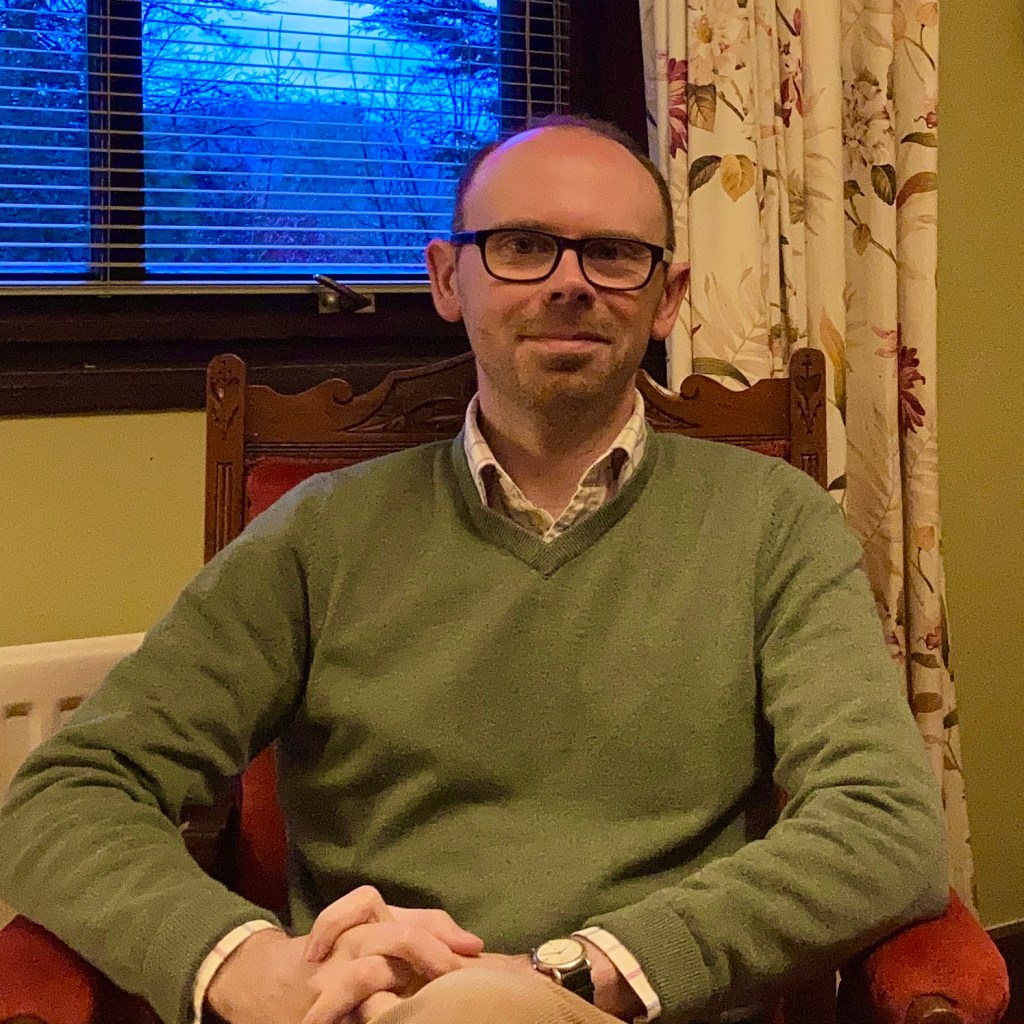
I am an Advanced Candidate with the Independent Group of Analytical Psychologists (IGAP), one of the five Jungian training bodies in Britain, with whom I began training in 2019. I am also a full-time priest in the Church of England, in which I have been a somewhat unconventional cleric since 2003. Both of these fields of soul work sustain my deep appreciation of the rich diversity of human life.
Working in the spirit of CG Jung
Analytical Psychology, as Jung called his form of psychoanalysis, is a long-established school of depth psychology, the field in which he and Sigmund Freud were the most important pioneers. Depth psychology works on the understanding that there is more to the human psyche than the workings of the conscious mind, and seeks to develop the relationship between what is conscious and unconscious in us. Jung had the courage to insist that most of our psychological struggles arise when we ignore or reject the unconscious parts of ourselves.
At the heart of this deepening relationship is befriending the ways in which our unconscious life takes shape in our conscious life. Chief among them is pondering what we experience in our dreams. We trace in them what is unique to us and what is common to all humanity. We may turn to the great analogues of the abiding patterns of human life expressed in religion, mythology, astrology, alchemy, fairytale, or myriad others, in order to help us perceive how the eternal drama is being played out in us, and try to discern where they are leading us.
Like Jung, I take it as read that the analysand and analyst are coworkers in this enterprise. Within the psychological container of the consulting room they sit down to converse, giving time and space to what needs to emerge. The analyst has a formal training in holding the work and giving appropriate attention to its expression, but does not have the answers. Insights will intimate themselves in their own good time. And in due course both the analyst and the analysand will grow because of what they experience together.
 David Sudron Psychoanalysis